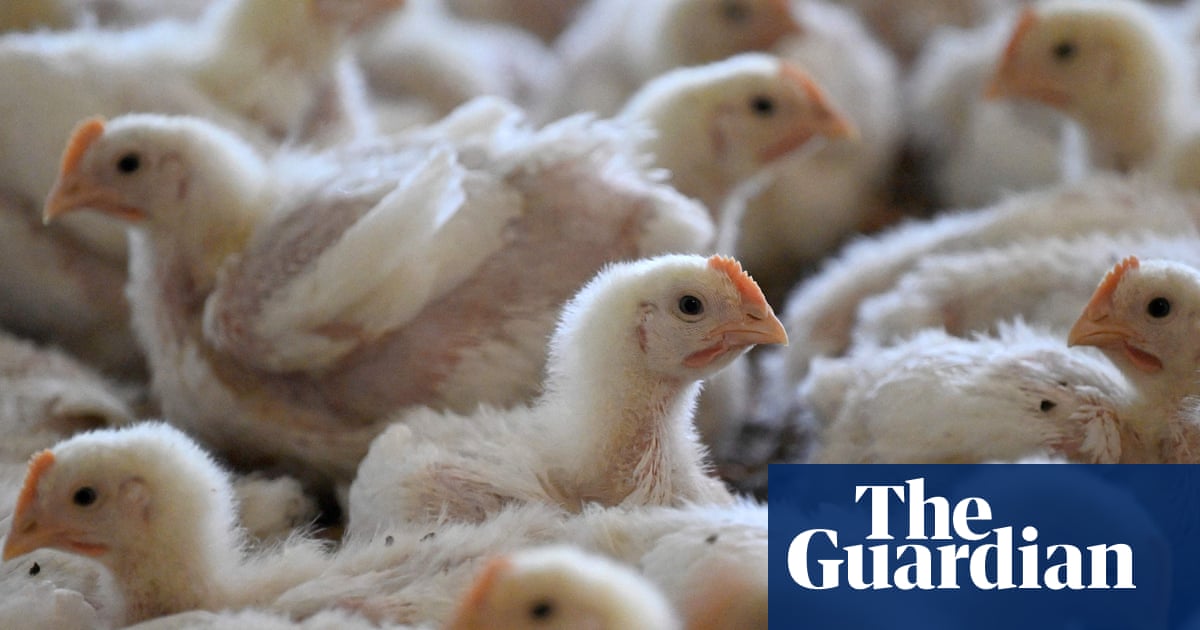
The Danish government has initiated a push for a national ban on fast-growing broiler chickens, commonly referred to as “turbo chickens,” while calling for a synchronized prohibition across the European Union. The political momentum builds on growing public concern regarding intensive farming practices and animal welfare standards within the agricultural sector.
The push for legislative action follows a recent documentary broadcast by TV2, which featured secretly filmed footage from a chicken producer in North Jutland. The investigation alleged that a prominent producer, Christian Tvergaard, violated domestic regulations by restricting the daily darkness period for birds to half the legally required amount, a practice intended to stimulate continuous feeding and accelerate growth.
At the center of the debate is the Ross 308 breed, which dominates conventional poultry production in Denmark. These birds can expand from an initial weight of about 50 grams to two kilograms in just 33 days. By contrast, traditional or slower-growing breeds typically require between 46 and 63 days to reach equivalent market weights. Animal welfare advocates argue that such rapid physiological development places immense strain on the birds, frequently resulting in severe skeletal deformities and organ failure.
Denmark’s minister for nature and animal welfare, Christian Rabjerg Madsen, expressed public discouragement regarding the consumption of these breeds and confirmed intentions to pursue regulatory restrictions. "I want to work for a national ban. But it’s clear that this is something that needs to be investigated both legally and economically," he told the broadcaster, adding that efforts would extend toward establishing an EU-level prohibition.
In response to the documentary revelations, Tvergaard acknowledged operational failures in a statement to TV2: “I look inward and must admit that I have made some wrong decisions. There is no excuse for that, but I can learn from it and correct where I have not done well enough. And I have done that, both when it comes to the lighting programme and a number of the workflows we have in the stable, where both procedures and the roster have been tightened up.”
While political support for the ban grows among lawmakers, industry representatives emphasize the complexities of implementation. Producers warn that unilateral national restrictions could simply shift consumer demand toward imported alternatives unless broader trade measures are enacted. As one industry executive noted, "If Denmark alone bans the production of fast-growing chickens while shops, restaurants and consumers in the Danish market can continue to buy imported, fast-growing chicken of more or less questionable quality, we risk a situation in which animal welfare certainly does not benefit."
Animal welfare organizations point to the broader European landscape to contextualize the debate. According to estimates from advocacy groups, roughly 95 percent of chickens across the bloc are currently raised in intensive farming systems optimized for maximum output and minimal cost. Critics characterize this model as a systemic compromise on living standards.
"Fast-growing breeds are inherently predisposed to suffering, with their bodies growing so quickly they can barely stand on their legs," said Reineke Hameleers, chief executive of Eurogroup for Animals. "Denmark’s political willingness to stop this is an example that should be followed by the EU, for it presents the progressiveness this industry needs, one that is backed up by scientific evidence."
Animal Protection Denmark has similarly criticized the breeding practices as fundamentally unsustainable, advocating for mandatory production timelines that align with organic standards. The debate arrives at a time when agricultural ethics feature prominently in Danish public discourse, following previous national debates centered on intensive pig farming and a scheduled wind-down of mink production.
As discussions continue, observers note that public sentiment remains divided on how to balance ethical farming reforms with food affordability and market competitiveness. Reflecting on the broader ethical implications of industrialized farming, one commenter observed, "Nature is cruel but we don't have to be." Another added, "I think if the only way to eat cheap meat is to have these animals live a tortured life, we shouldn't have cheap meat. We can have tasty, healthy food that doesn't cost an arm and a leg without meat."

